
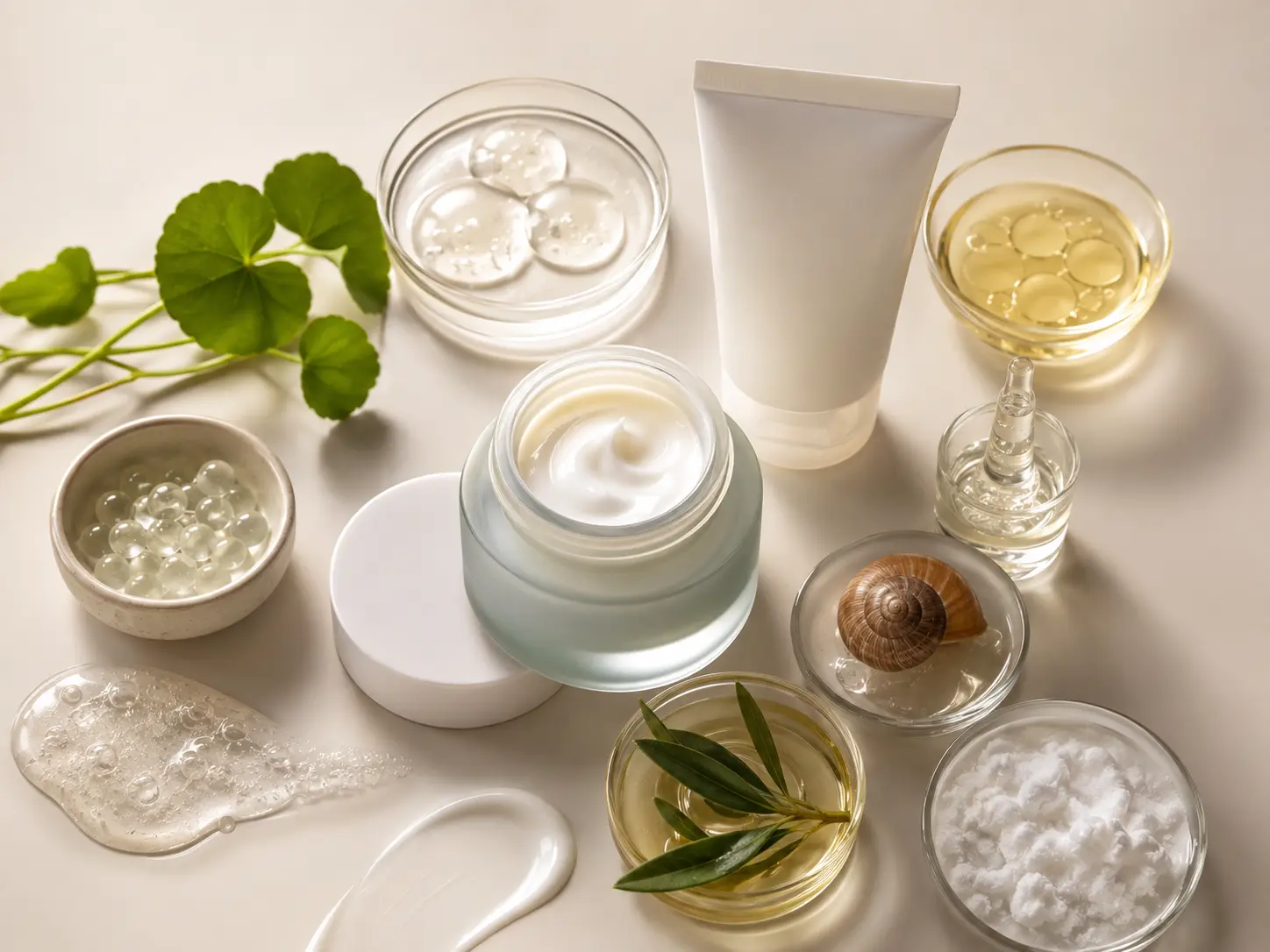
The most important ingredients in a Korean moisturizer are ceramides, hyaluronic acid, and a humectant-emollient-occlusive combination that mirrors your skin’s own barrier. The best formulas layer hydration the way skin actually absorbs it: pulling water in, softening the surface, then sealing it there. Once that logic clicks, ingredient lists stop reading like a foreign language, and you shop for function instead of a pretty label.
What Makes an Ingredient “Good” for a Korean Moisturizer?
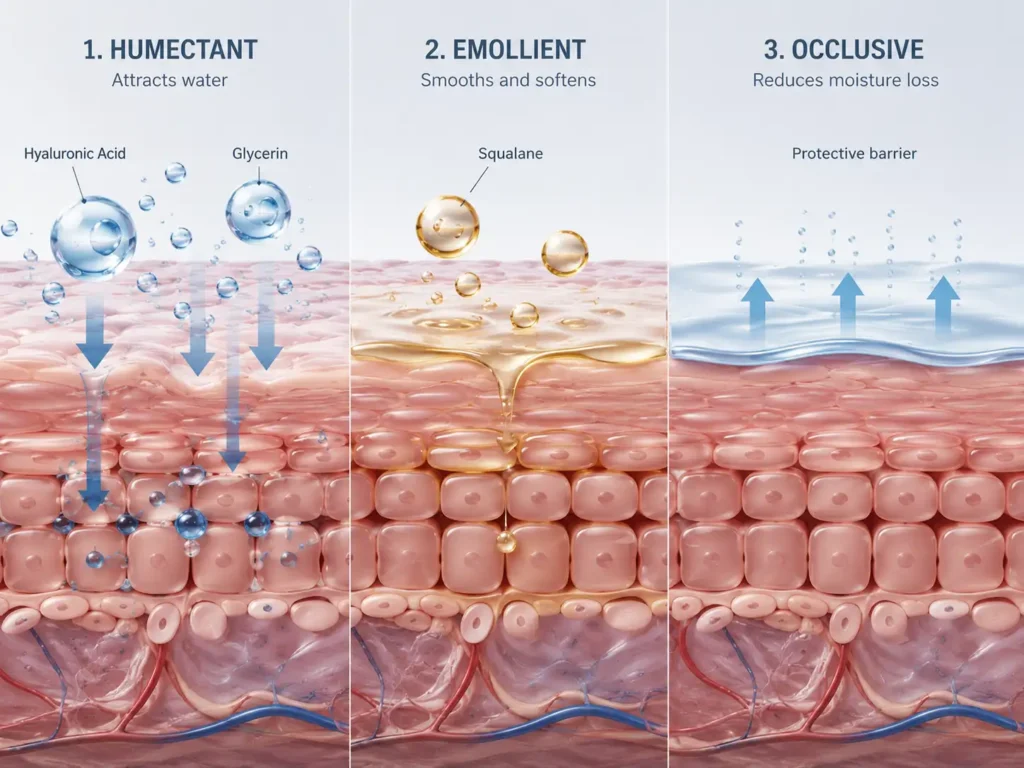
Every effective moisturizer, Korean or not, comes down to three ingredient types. Humectants pull water into the skin from the air and deeper layers; hyaluronic acid and glycerin sit here. Emollients soften rough patches and smooth the surface, the way squalane does. Occlusives lay down a light seal that slows transepidermal water loss, or TEWL, the process by which moisture escapes through skin. A moisturizer that hydrates without sealing anything in tends to feel great for an hour, then leave skin tight again by afternoon.
Comparison Table — Top Korean Moisturizer Ingredients at a Glance
It helps to see how the most common Korean moisturizer ingredients actually compare before getting into specifics.
| Ingredient | Main Benefit | Best For | Formula Role |
| Ceramides | Rebuilds skin barrier | Dry, sensitive skin | Occlusive |
| Hyaluronic Acid | Holds water in skin | Dehydrated, dry skin | Humectant |
| Niacinamide | Balances oil, evens tone | Oily, acne-prone skin | Active |
| Centella Asiatica | Soothes irritation | Sensitive, reactive skin | Calming active |
| Snail Mucin | Hydrates, aids repair | Dry, dull skin | Humectant |
| Squalane | Seals in moisture | Oily, combo skin | Emollient |
| Panthenol | Soothes, reinforces barrier | Sensitive skin | Humectant |
Best Barrier-Repair Ingredients
If your barrier is compromised, flaking, stinging with products that never bothered you before, or just perpetually tight, ceramides deserve first priority. They’re lipids naturally found in the outer skin layer, and applying them topically helps replace what’s stripped away by over-exfoliation or aggressive actives. Centella asiatica, often labeled cica, is the other barrier staple in K-beauty, valued for calming redness. Beta-glucan and panthenol usually show up alongside these two, keeping barrier-repair formulas from stinging during a flare-up.
How Do Ceramides Repair the Skin Barrier?
Ceramides slot into the gaps between skin cells in the stratum corneum, the skin’s outermost layer, alongside cholesterol and fatty acids. With enough present, that layer holds together better and resists irritants.
Best Hydrating Ingredients (Humectants & Moisture Lockers)
Hyaluronic acid, glycerin, and beta-glucan all act as humectants, pulling water toward the skin instead of adding oil. Used alone, humectants can backfire in dry climates, drawing moisture from wherever is available, including your skin, if nothing seals it in. That’s why layering matters: apply a humectant-heavy serum, then follow with something that locks it in. Squalane bridges both roles well; it’s a lightweight emollient that slows moisture loss without the heaviness of thicker plant oils.
Best Ingredients for Skin-Type Matching (Dry, Oily, Sensitive, Acne-Prone)
Not every good ingredient works for every face, and that’s where a lot of guides fall short.
Korean Moisturizer for Dry or Dehydrated Skin
Dry skin lacks oil; dehydrated skin lacks water, and the two often overlap. Rough, flaky skin usually needs richer emollients alongside ceramides. Tight, dull but not flaky skin does better starting with hyaluronic acid and a humectant-rich formula. Plenty of people need both at once.
Korean Moisturizer for Oily or Combination Skin
Niacinamide is the standout here, balancing oil production and supporting a more even tone over time. Lightweight squalane hydrates without the heavy, pore-clogging feel oily skin tends to react against. Look for non-comedogenic on the label as a general starting filter.
Korean Moisturizer for Sensitive or Acne-Prone Skin
Centella asiatica, panthenol, and heartleaf, listed as Houttuynia cordata, show up repeatedly here because they’re generally well tolerated and calming. Fragrance-free is worth prioritizing too, since added fragrance is a common trigger for reactive skin.
Emerging & Bonus Ingredients Worth Knowing
Snail mucin remains one of K-beauty’s most talked-about ingredients, and for good reason. It’s genuinely useful for hydration and has a film-forming quality that leaves skin feeling conditioned rather than just damp. Rice extract shows up in brightening formulas and can support smoother texture over time. If you’re layering retinol or vitamin C into your routine, treat them as an addition, not a replacement.
Korean Skincare Ingredients to Approach Carefully (or Avoid)
Not every ingredient on a label deserves a spot in your routine. High concentrations of drying alcohols, often listed as alcohol denat., can undermine barrier repair even in a well-formulated product. Added fragrance is worth avoiding on reactive skin, and sensitizing actives layered without buffering can do more harm than good. INCI, short for International Nomenclature of Cosmetic Ingredients, lists ingredients roughly by concentration, so one near the bottom is present in a low amount.
How to Read a Korean Moisturizer’s Ingredient List (Quick Checklist)
Reading INCI lists gets easier with practice.
- Check the first five to ten ingredients; they carry the bulk of the formula’s function.
- Confirm a barrier ingredient like ceramides or hyaluronic acid appears early, not near the end.
- Match texture to skin type: richer creams for dry skin, gel-creams for oily skin.
- If your skin is reactive, scan for fragrance or parfum first.
FAQ
What are the most effective ingredients in Korean skincare?
Ceramides, hyaluronic acid, niacinamide, and centella asiatica consistently show up across well-reviewed K-beauty moisturizers because they cover hydration, barrier repair, and calming for a wide range of skin types.
What Korean skincare ingredients should I avoid?
High-alcohol formulas, unnecessary fragrance, and strong actives layered without buffering cause the most trouble.
What’s the difference between dry and dehydrated skin?
Dry skin lacks natural oil; dehydrated skin lacks water, regardless of skin type, and the two often need a different fix.
Conclusion
The right Korean moisturizer isn’t about chasing whatever ingredient is trending. It’s about matching a humectant, an emollient or occlusive, and a barrier-support ingredient to what your skin actually needs. Once you can read a label that way, choosing between a shelf of near-identical jars gets a lot less confusing.