

Why Your Skin Type Determines the Right Korean Moisturizer
There’s no single “best Korean moisturizer” — the one that works for your friend’s combination skin might sit heavy and greasy on yours, or leave someone with dry skin still tight by lunchtime. What actually decides whether a moisturizer works is your skin type, the texture you choose, and the ingredients underneath the marketing, not the brand or how many steps the routine has. Korean skincare moisturizer formulas tend to lean hydration-first, layering several thin, water-based products before anything heavier, which is a bit different from how a lot of Western routines are built around one rich cream doing all the work. That difference matters here: once you understand your own skin type, the wide world of K-beauty products stops feeling overwhelming and starts feeling like a shortcut instead of another decision to second-guess.
How to Identify Your Skin Type
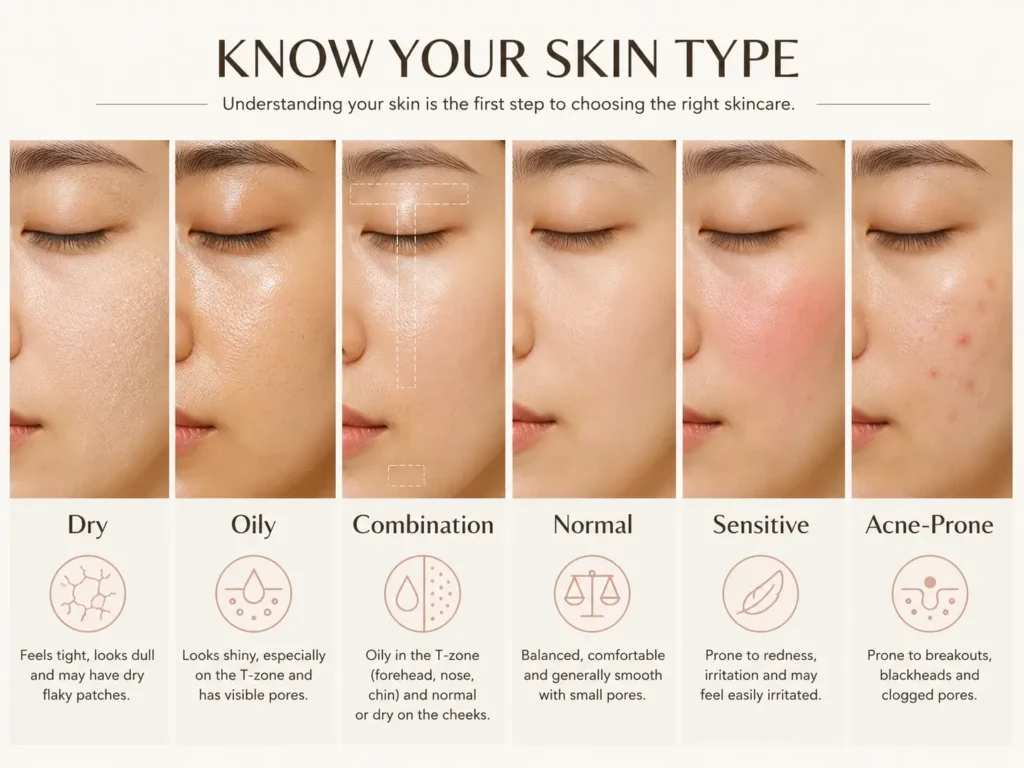
Skin type isn’t guesswork, even if it feels that way at 11pm scrolling reviews. A few honest signs will usually tell you what you’re working with, without needing a lab test or a dermatologist visit to start. Dry skin feels tight, especially after cleansing, and can look flaky or dull. Oily skin shows up as shine, mostly across the forehead, nose, and chin — the classic oily T-zone — often with visible pores. Combination skin is the in-between case: an oily T-zone paired with drier or normal cheeks, which is why one moisturizer rarely feels right everywhere on the face. Sensitive skin reacts fast, with redness, stinging, or itching after new products, sometimes even ones marketed as gentle. Normal skin is fairly balanced and low-drama. Acne-prone skin breaks out easily, sometimes regardless of how oily or dry it otherwise is.
Dehydrated Skin vs. Dry Skin
These two get confused constantly, and it’s worth untangling. Dry skin lacks oil — it’s a skin type, and it’s fairly stable over time. Dehydrated skin lacks water, and it’s a temporary condition that can affect anyone, including oily skin that still feels tight or looks flaky in patches. If your “dry” skin seems to shift with the seasons or your routine, dehydration is probably part of the picture, and that changes which ingredients actually help.
Matching Moisturizer Texture to Your Skin Type
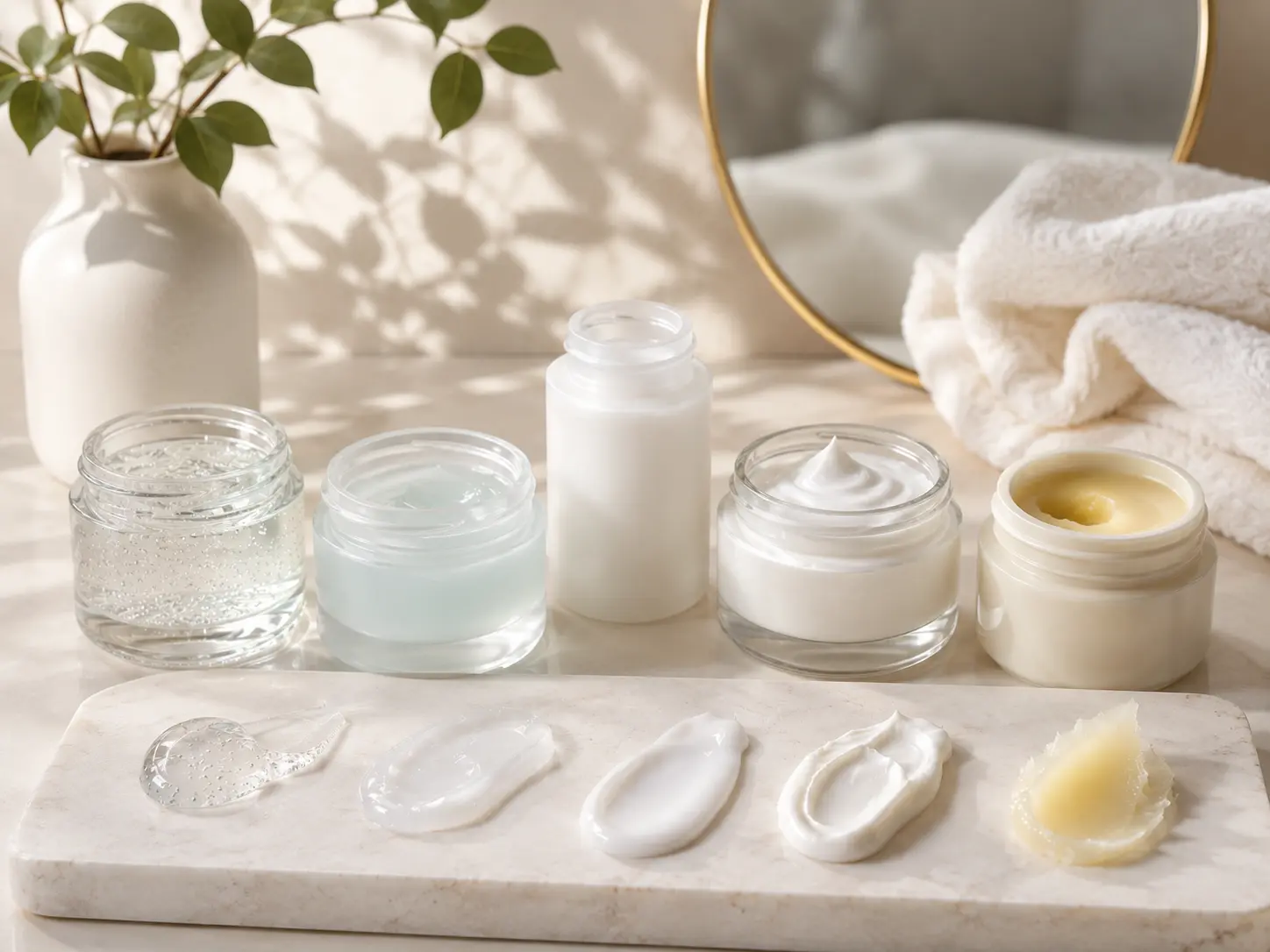
Once you know your skin type, texture does most of the heavy lifting. Gel moisturizers are light, water-based, and absorb fast — a good fit for oily or acne-prone skin, and a big part of why “best Korean gel moisturizer” gets searched so often. Gel-creams split the difference, offering more cushion than a straight gel while still staying non-greasy, which suits combination skin nicely since it hydrates the drier cheeks without weighing down an already oily T-zone. Lotions and emulsions sit in the middle of the weight spectrum — enough hydration for normal skin without feeling heavy. Creams bring more body and a richer texture, which dry or dehydrated skin tends to need, especially through colder months when indoor heating pulls moisture out of the air. Balms sit at the heaviest end, mostly reserved for very dry patches or as a sealing step layered over other products. Climate plays into this too — skin that’s comfortable with a lightweight lotion in summer often wants something richer once winter dries things out.
Key Ingredients to Look For — and Ones to Watch Carefully
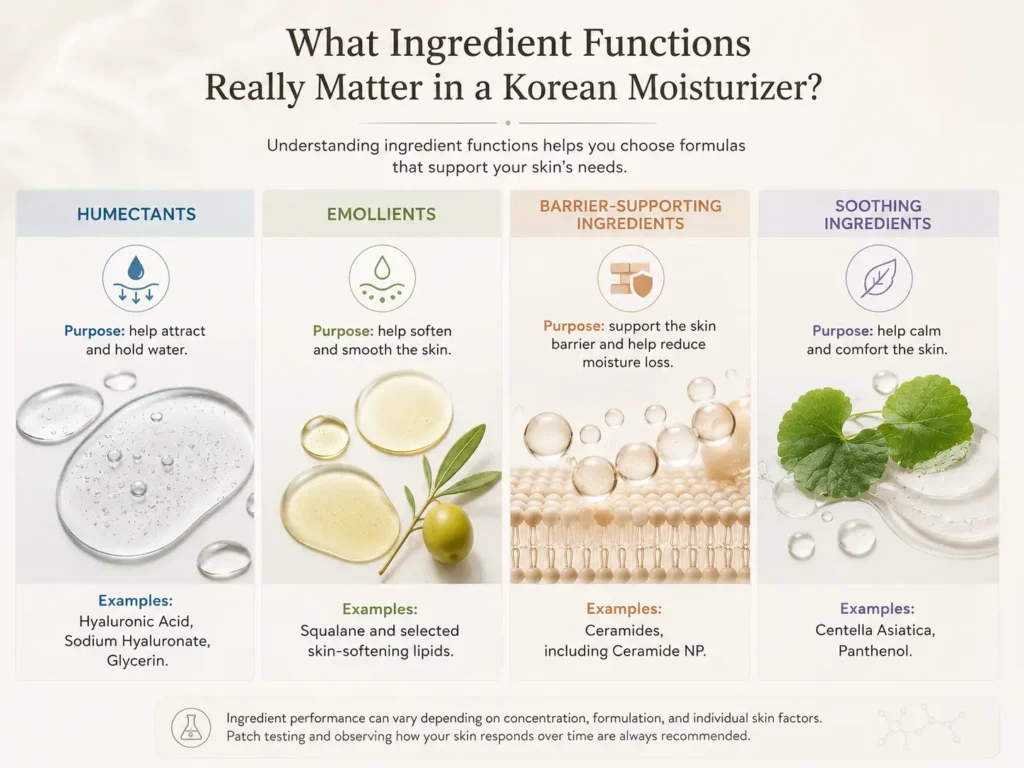
Ingredients are easier to sort once you group them by function instead of memorizing a long list. Humectants pull water into the skin: hyaluronic acid (sometimes labeled sodium hyaluronate) and glycerin are the two you’ll see constantly, and both work across nearly every skin type. Emollients smooth and soften — squalane and panthenol fall here, along with centella asiatica, which also has a calming reputation that’s made it a staple in sensitive-skin formulas. Occlusives seal moisture in after it’s already there and slow the water loss that would otherwise happen overnight; ceramides, including Ceramide NP, do double duty as barrier-support and a light occlusive, which is why they show up so often for compromised skin. Snail mucin shows up frequently in Korean moisturizers for its combination of hydration and soothing effect, though plenty of good formulas skip it entirely. For anyone with reactive or acne-prone skin, non-comedogenic, fragrance-free, and alcohol-free labeling is a reasonably safe default to start from, though it’s not a guarantee that any single formula will suit you.
Ingredients to Be Cautious With for Sensitive or Acne-Prone Skin
Fragrance and essential oils are the most common irritation triggers in an otherwise gentle formula, even ones marketed as natural. Alcohol denat. can also be drying or irritating for reactive skin, though it’s not automatically a problem for everyone. If a moisturizer is making your skin red, itchy, or breaking you out, check the ingredient list against these three before writing off Korean moisturizers altogether — the acne usually traces back to a specific formula, not the whole category.
Common Mistakes to Avoid — and How to Apply Your Moisturizer Correctly
The most common mistake is skipping moisturizer on oily skin out of fear it’ll add shine — it usually backfires, since skipping it can push oily skin to produce even more oil to compensate. Another is picking texture out of habit rather than adjusting for season: the gel that felt perfect in July can leave skin tight by January. Skipping a patch test before trying a new product is a real risk too, especially for sensitive skin, since even well-reviewed formulas with glowing reviews can still cause a reaction on your particular skin. Where moisturizer sits in your routine matters too — it generally goes after serum or essence and before sunscreen, following the rule of applying products thinnest to thickest so each layer has time to actually absorb before the next one goes on.
Choosing With Confidence
You now have the real framework: skin type, then texture, then ingredients. That combination, not a brand name or a viral review, is what decides whether a Korean moisturizer actually works for you.