

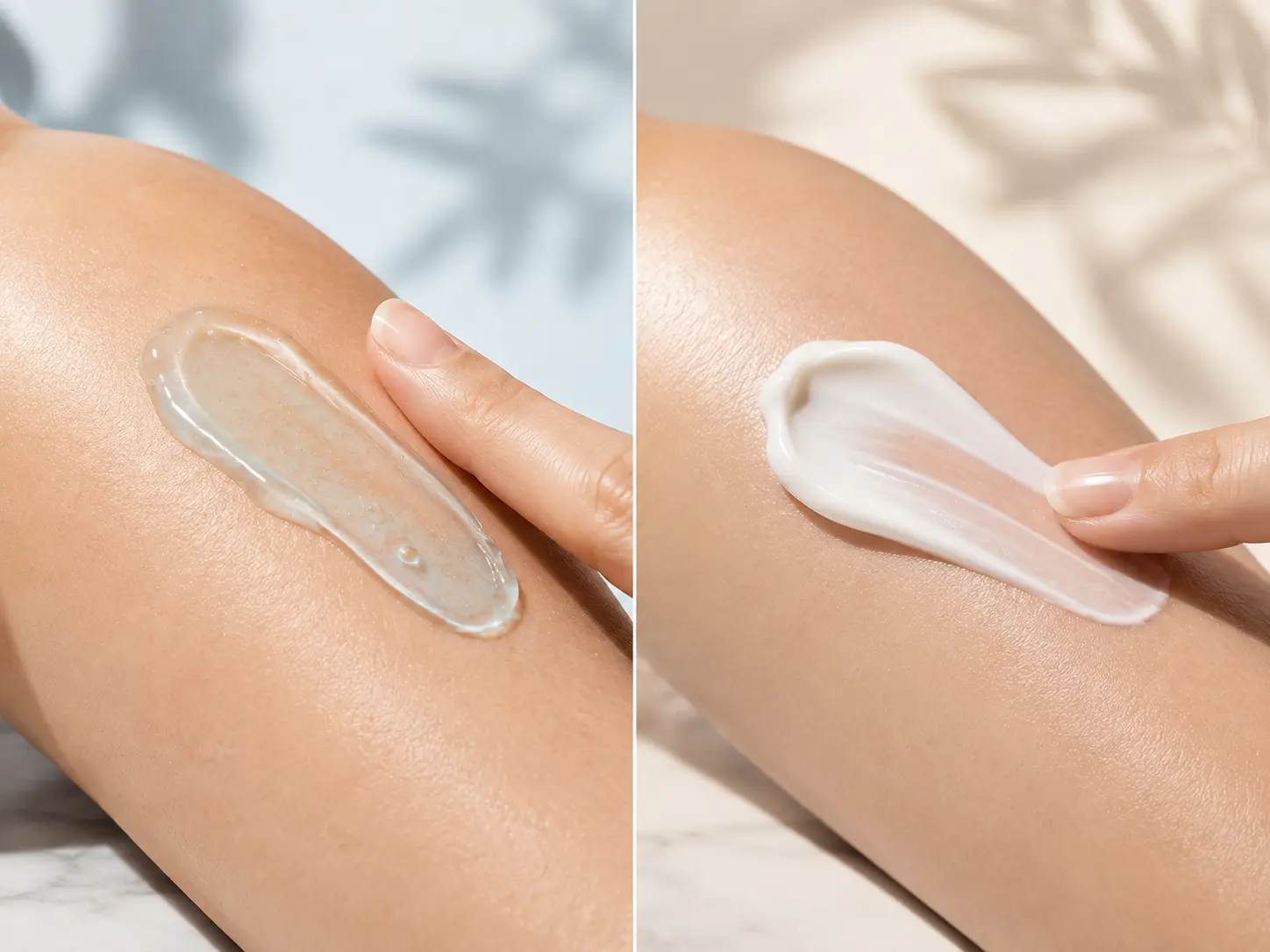
Quick Answer: Gel or Cream Moisturizer?
Shiny by midday? Gel is your answer. It’s water-based, sinks in within seconds, and won’t leave anything greasy sitting under your sunscreen or foundation. Tight, flaky, itchy skin needs the opposite: a cream, because it’s richer and actually holds moisture through the night instead of letting it evaporate. Got combination skin? Use both — gel on the oily bits, cream where things run dry. There isn’t a universal winner here. It comes down to how much oil your own skin makes and how much backup it needs to hold onto water.
Gel vs Cream Moisturizer at a Glance
| Feature | Gel Moisturizer | Cream Moisturizer |
|---|---|---|
| Base | Water-based | Oil-based |
| Texture on Skin | Light, bouncy, absorbs fast | Rich, thicker, sits on top |
| Best For | Oily, acne-prone, combination | Dry, dehydrated, sensitive |
| Key Ingredients | Hyaluronic acid, glycerin | Ceramides, squalane, emollients |
| Barrier Support | Mainly humectant | Humectant plus occlusive |
| Best Season | Summer, humid climates | Winter, dry climates |
← Swipe left or right to compare →
What Is Gel Moisturizer vs Cream Moisturizer?
Gel Moisturizer: Water-Based and Lightweight
Gel moisturizers start with water as the base, which is why they feel light, almost bouncy, when you pat them on. Most lean on humectants like hyaluronic acid and glycerin — ingredients that pull water into skin rather than lock it there. Some gels sneak in a bit of oil too, so don’t assume every jar behaves the same way. Read the label.
Cream Moisturizer: Oil-Based and Rich
Creams go heavier on oils, butters, and thicker emulsifiers, which is where that cushiony, almost velvety feel comes from. They usually pair humectants with emollients and occlusives — think squalane, shea butter, ceramides — to soften skin and keep water from slipping back out. Plenty of modern creams are formulated to feel lighter than you’d expect, so “cream” doesn’t automatically mean heavy anymore
How Ingredients Affect Hydration and Skin Barrier
Here’s the part that actually explains the difference: your skin barrier. It’s the outermost layer, and its whole job is keeping water in and everything else out. When it’s not working well, you lose water through your skin faster than you should — dermatologists call this transepidermal water loss, or TEWL.
Three ingredient types do the heavy lifting. Humectants (hyaluronic acid, glycerin) pull water in. Emollients (squalane, shea butter) smooth rough patches. Occlusives (ceramides, petrolatum, dimethicone) sit on top and slow water from escaping. Gels usually lean on humectants alone. Creams tend to bring all three, which is exactly why they tend to do more for TEWL and barrier repair over time.
Which Is Better for Your Skin Type?
Oily, Acne-Prone & Combination Skin → Gel
If your skin already makes plenty of oil, gel gives it hydration without adding more. That’s not a claim that cream clogs pores — formulation matters more than category. But if shine and breakouts are what you’re fighting, gel is the simpler place to start.
Dry, Dehydrated & Sensitive Skin → Cream
Dry, dehydrated skin usually needs help holding water in, not just more water thrown at it — which is exactly what cream’s humectant-plus-occlusive combo does. Sensitive skin tends to do well with fragrance-free creams built around ceramides, since they support the barrier without the irritation risk that some active-packed gels carry.
Combination Skin: When It Could Go Either Way
You don’t have to pick one lane. A lot of people run a lighter gel on the oily zones and cream where things get dry, then adjust the balance as the seasons shift.
Climate and Seasonal Considerations
Weather changes what your skin needs, even if your skin type stays the same. Humid summers usually make gel feel more comfortable — more ambient moisture, more of your own oil, less need for a heavy formula. Cold, dry winters and indoor heating pull moisture out faster, and that’s when a richer cream earns its place. Switching formulas by season isn’t overkill. It’s just tracking what your skin is actually dealing with.
Gel-Cream Hybrid: How to Choose and Layer
Can’t decide? Try a gel-cream hybrid. It keeps the light, fast-absorbing texture of a gel but adds more of the emollients and occlusives you’d find in a cream, aiming for real barrier support without the heavy finish. Combination and normal skin types tend to get along with these especially well.
Pick based on your main problem: gel for oil control, cream for dryness, hybrid if you’re somewhere in between. For application, moisturize after cleansing and any serums, give it a minute or two to sink in, then move on to sunscreen or a heavier night cream. If you wear makeup, gel and gel-cream formulas usually sit better underneath since there’s less residue for foundation to cling to.
Common Mistakes to Avoid
Skipping moisturizer because your skin is oily is a common one — and it can backfire, pushing skin to produce even more oil to compensate. Piling on rich products because your skin is dry is the flip side, and it often just feels heavy without doing much extra. Some people stick to whatever they’ve always used, regardless of what their skin is doing right now. Others swap products every few weeks chasing something “better,” which unsettles the barrier more than sticking with one solid formula for a while would.
FAQ: Gel vs Cream Moisturizer
Can you use gel and cream moisturizer together?
Sure — plenty of people do. Gel in the morning for something light, cream at night when skin has hours to soak it in.
Is gel moisturizer good enough for dry skin?
For mild dryness, maybe. For genuinely dry or dehydrated skin, gel alone usually falls short — pair it with a cream or reach for a hybrid instead.
Do I need a heavier moisturizer in winter?
Most people do. Cold air and indoor heating both pull moisture out of skin faster than usual, so a richer cream in winter isn’t overkill — it’s just practical.
Which absorbs faster under makeup or sunscreen?
Gel and gel-cream formulas, hands down. They sink in quickly and leave less on the surface for foundation or SPF to grab onto.