
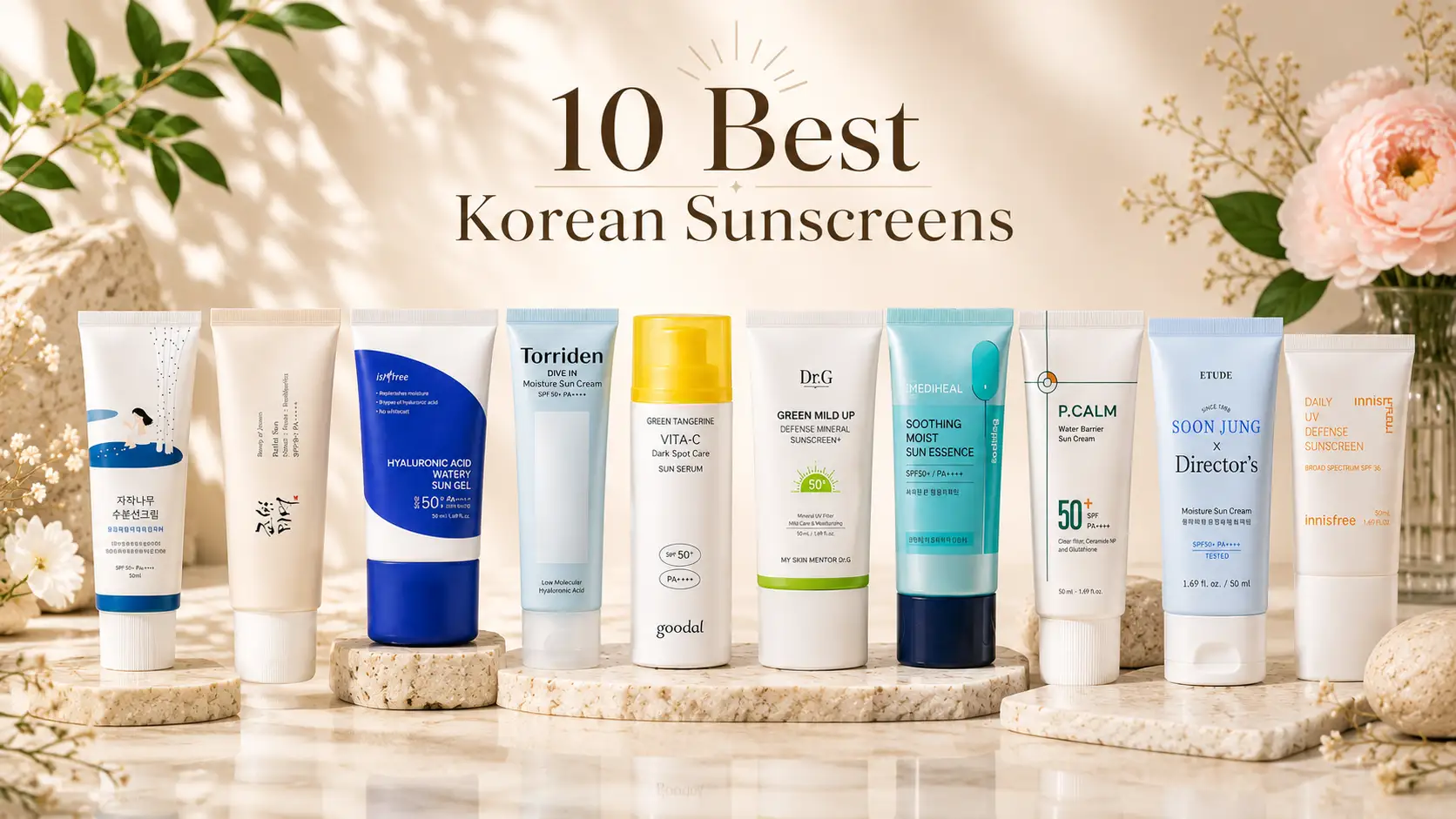
If your skin turns red, itchy, or tight the moment you try a new SPF, you’re not imagining it — a lot of sunscreens are formulated for durability and water resistance, not comfort. Korean sunscreen for sensitive skin takes a different approach, leaning on lightweight textures and calming ingredients instead of heavy filters. I tested ten of the most talked-about formulas to find out which ones actually hold up on reactive skin.
At-a-glance comparison table
| Product | SPF/PA | Type | Frag-Free | Alc-Free | White Cast | Finish | Best For | Average Market Price |
|---|---|---|---|---|---|---|---|---|
| SKIN1004 Madagascar Centella | SPF50+ PA++++ | Hybrid | Yes | Yes | Minimal | Dewy | Reactive, redness-prone | $15.50 |
| Round Lab Birch Juice | SPF50+ PA++++ | Chemical | Yes | Yes | None | Natural | Combination, dry-sensitive | $20.30 |
| Beauty of Joseon Relief Sun | SPF50+ PA++++ | Hybrid | No (light) | Yes | Minimal | Dewy | Dry, sensitive-oily | $15.50 |
| Isntree Hyaluronic Watery | SPF50+ PA++++ | Chemical | Yes | Yes | None | Watery | Oily, acne-prone | $21.96 |
| Torriden Dive-In Low Molecule | SPF50+ PA++++ | Chemical | Yes | Yes | None | Lightweight | Damaged-barrier | $20.30 |
| Goodal Green Tangerine | SPF50+ PA++++ | Chemical | No (light) | Yes | None | Matte-dewy | Sensitive-oily | $15.70 |
| Dr.G Green Mild Up Sun | SPF50+ PA++++ | Hybrid | Yes | Yes | Minimal | Velvet | Rosacea, eczema | $23.00 |
| Mediheal Madecassoside | SPF50+ PA++++ | Mineral-leaning | Yes | Yes | Slight | Calming | Post-procedure | $27.73 |
| P.CALM Blemish Repair Sun | SPF50 PA+++ | Chemical | Yes | Yes | None | Weightless | Acne-prone | $16.00 |
| Etude SoonJung | SPF50+ PA++++ | Chemical | Yes | Yes | None | Barrier-friendly | Eczema, reactive | $24.00 |
How we evaluated these sunscreens
Every sunscreen on this list was worn for at least two weeks on cheeks, forehead, and jawline — the areas most prone to flare-ups — before earning a spot here. We weren’t just checking SPF numbers on a label; we wanted to know how each formula actually behaved on skin that reacts to almost everything.
Our testing criteria
- Texture and how it sits under moisturizer or makeup
- White cast on medium and deep skin tones
- Finish (dewy, matte, or somewhere in between)
- Irritation risk over repeated use
- Hydration level and how it feels by midday
- UVA/UVB coverage and PA rating
- Alcohol and fragrance content
- Reapplication feel over makeup
- Price relative to performance
Ingredients to look for
A gentle korean sunscreen usually leans on a specific set of calming, barrier-supporting ingredients rather than heavy actives. Here’s what shows up again and again in the formulas that performed best on reactive skin.
| Ingredient | What It Does | Best For |
|---|---|---|
| Centella Asiatica | Calms redness and supports the skin barrier. | Rosacea, reactive skin |
| Panthenol (Pro-Vitamin B5) | Draws in moisture and eases tightness. | Dry, dehydrated skin |
| Ceramides | Rebuilds the skin barrier and locks in hydration. | Damaged or compromised barrier |
| Heartleaf (Houttuynia Cordata) | Reduces inflammation and soothes irritation. | Acne-prone, reactive skin |
| Hyaluronic Acid | Hydrates without weighing the skin down. | Dehydrated, oily-sensitive skin |
| Madecassoside | A Centella derivative that speeds barrier recovery. | Post-procedure, irritated skin |
| Niacinamide | Evens skin tone and slightly strengthens the skin barrier. | Uneven tone, oily skin |
None of these ingredients are flashy, and that’s sort of the point — a sunscreen for redness works best when it’s not also introducing something new for your skin to fight.
Ingredients to avoid
A few common additives are worth watching for, even in sunscreens marketed as gentle.
Fragrance & essential oils
Added fragrance is one of the most frequent irritation triggers in skincare, sensitive skin included. A fragrance-free korean sunscreen removes that variable entirely, which is why most of the formulas here skip it.
Drying alcohols & harsh preservatives
Ingredients like denatured alcohol can strip the barrier and leave skin feeling tight within hours. An alcohol-free sunscreen tends to sit more comfortably over time, especially on skin that’s already compromised or reactive.
Which sunscreen fits your skin type?
Sensitive skin isn’t one thing — what calms rosacea can sting on eczema, and what works for acne-prone skin might be too heavy for dry-sensitive skin. Here’s a quick match:
| Skin Condition | Recommended Product | Why It Works |
|---|---|---|
| Rosacea | Dr.G Green Mild Up Sun | Velvet finish, minimal irritants. |
| Eczema | Etude SoonJung | Barrier-friendly, fragrance-free. |
| Reactive skin | SKIN1004 Madagascar Centella | High Centella concentration. |
| Sensitive-oily | Beauty of Joseon Relief Sun | Dewy finish without clogging pores. |
| Acne-prone | P.CALM Blemish Repair Sun | Weightless, non-comedogenic formula. |
| Combination | Round Lab Birch Juice | Natural finish that balances oily and dry areas. |
| Dry-sensitive | Torriden Dive-In Low Molecule | Deep hydration with low-molecular-weight hyaluronic acid. |
| Damaged-barrier | Torriden Dive-In Low Molecule | Supports the skin barrier while remaining gentle. |
| Post-procedure | Mediheal Madecassoside | Calming ingredients that promote skin recovery. |
The 10 best Korean sunscreens — full reviews
1. SKIN1004 Madagascar Centella Tone Brightening Sun
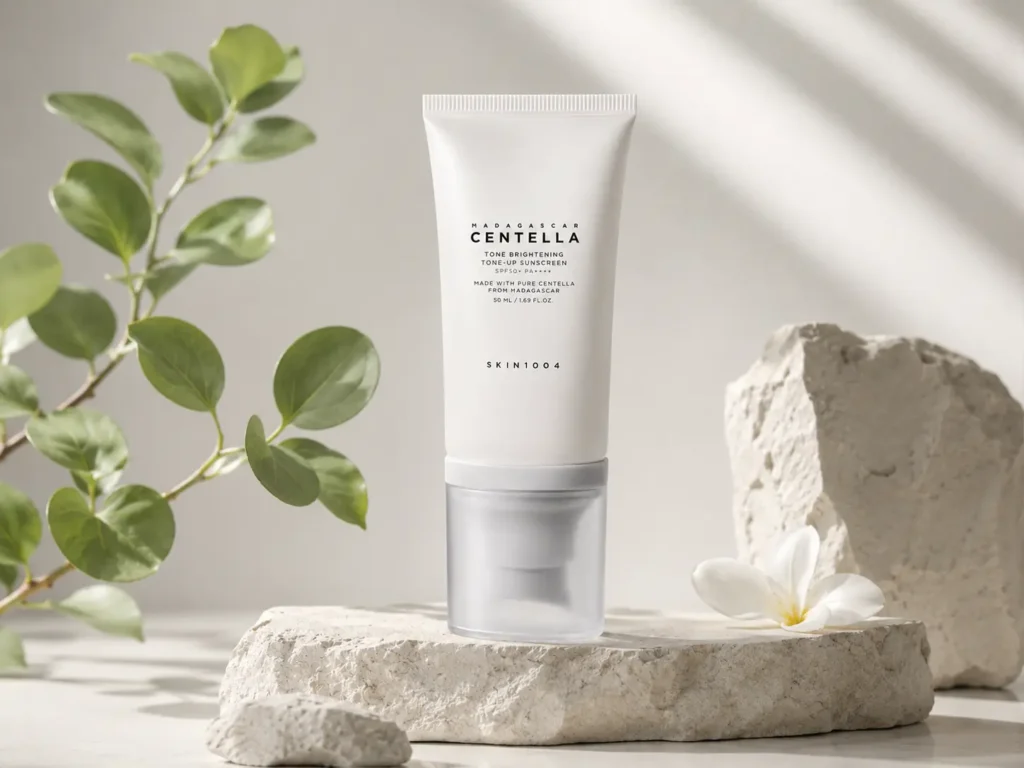
Best for damaged or barrier-compromised skin. Watery-gel texture, dewy finish, virtually no white cast. Fragrance-free but contains alcohol. SPF50+ PA++++. Pros: fast-absorbing, calming on flare-ups. Cons: can feel slightly tacky under heavy makeup.
2. Round Lab Birch Juice Moisturizing Sun
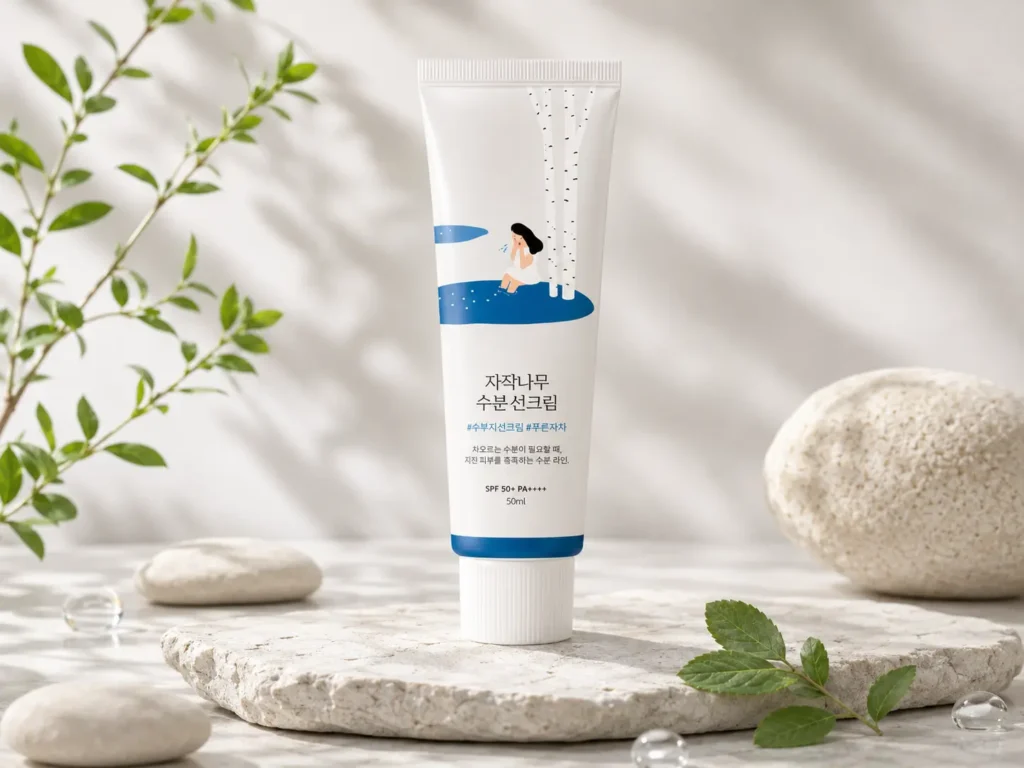
Best for dry, rosacea-prone skin. Milky, hydrating texture with a natural finish and zero white cast. Fragrance-free, contains alcohol. SPF50+ PA++++. Pros: genuinely soothing, layers well. Cons: less mattifying for oilier skin types.
3. Beauty of Joseon Relief Sun Rice+Probiotics
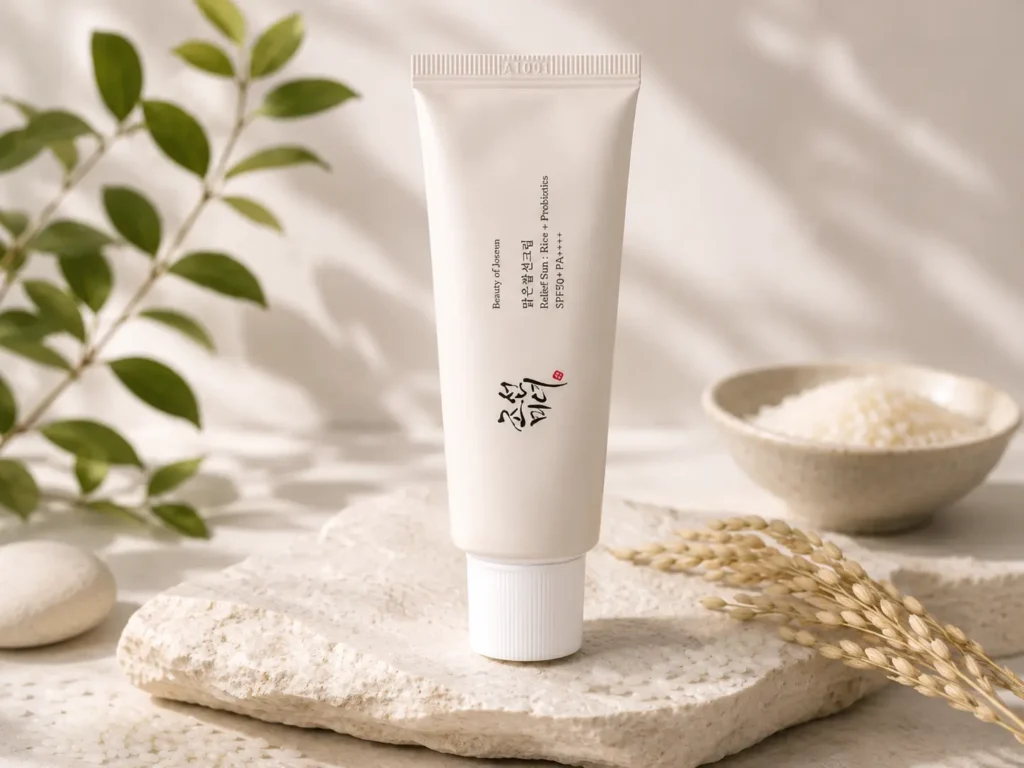
Best for combination skin. Lightweight, dewy, no white cast. Contains fragrance, alcohol-free. SPF50+ PA++++. Pros: cult-favorite texture, affordable. Cons: fragrance may bother truly reactive skin despite gentle formulation.
4. Isntree Hyaluronic Acid Watery Sun Gel
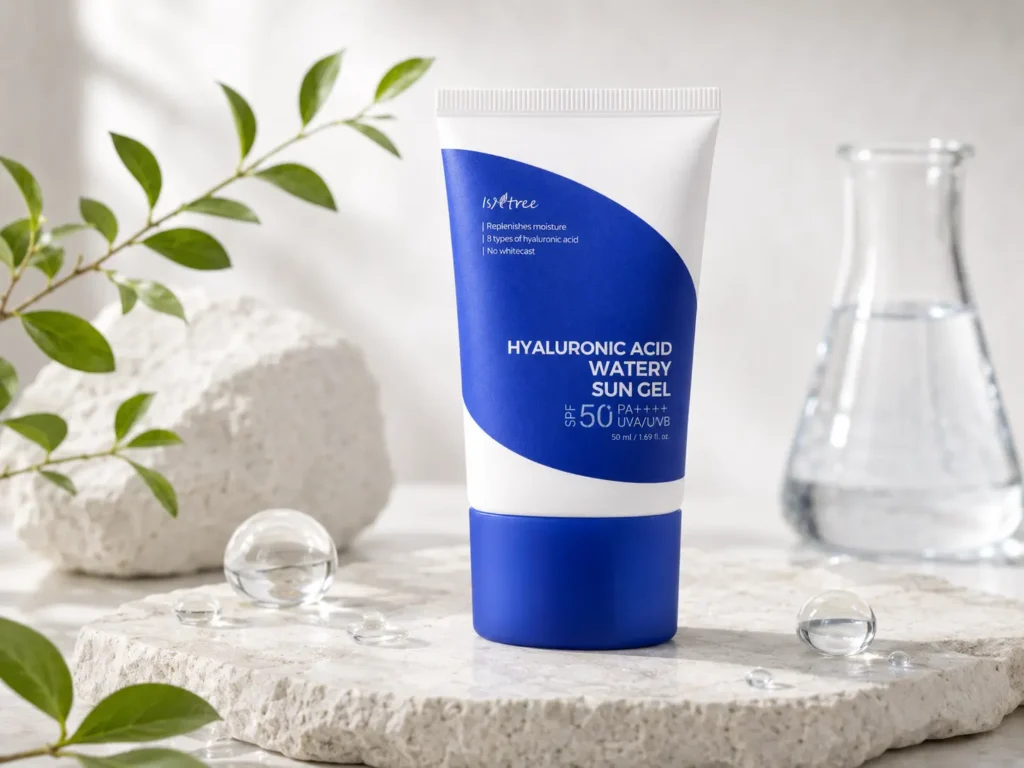
Best for oily, acne-prone skin. Gel-like, lightweight finish, no cast. Fragrance-free and alcohol-free. SPF50+ PA++++. Pros: doesn’t clog pores, hydrating without heaviness. Cons: needs a moisturizer underneath for drier skin.
5. Torriden Dive-In Low Molecule Sun
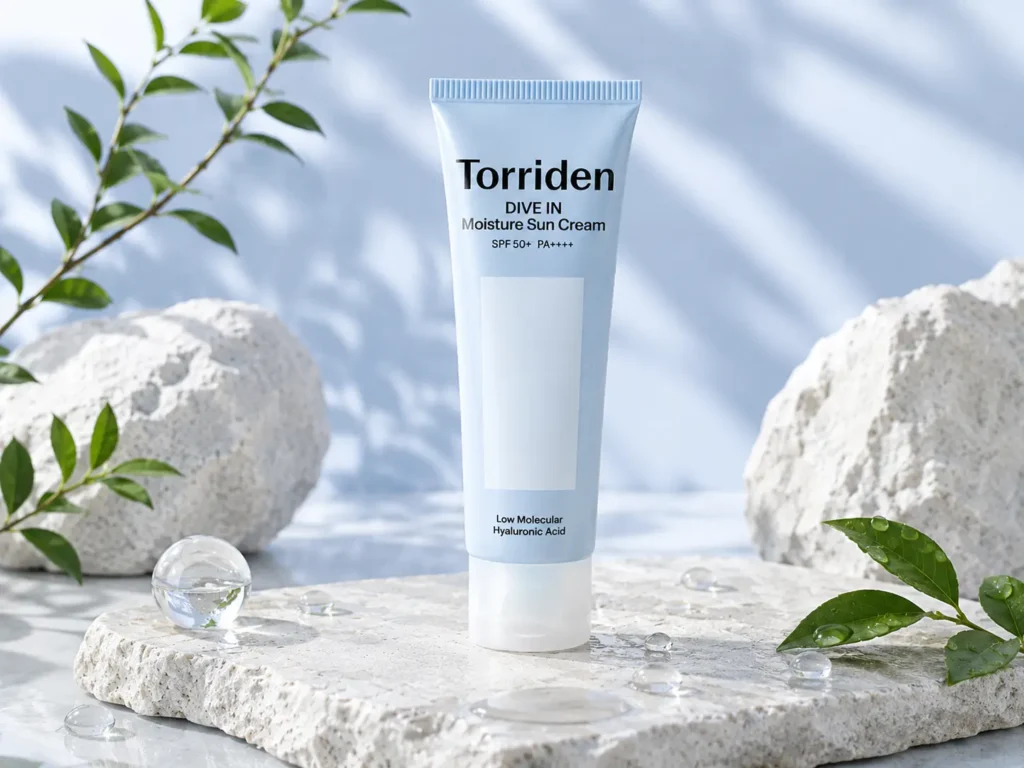
Best for dehydrated, sensitive skin. Hydrating, gel-cream texture, no white cast. Fragrance-free, alcohol-free. SPF50+ PA++++. Pros: plumping feel, calming on tight skin. Cons: finish can feel slightly damp initially.
6. Goodal Green Tangerine Vita C Sun
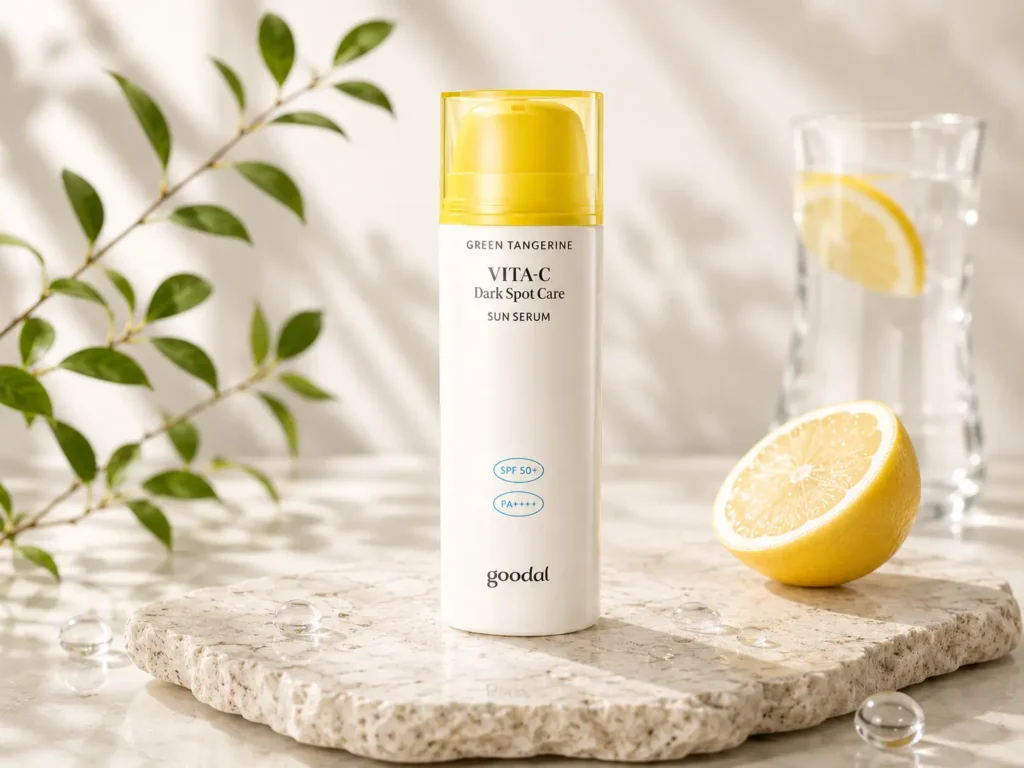
Best for dull, uneven tone. Dewy finish, minimal cast. Contains fragrance, alcohol-free. SPF50+ PA++++. Pros: brightening boost alongside protection. Cons: fragrance and higher price point limit sensitive-skin appeal.
7. Dr.G Green Mild Up Sun
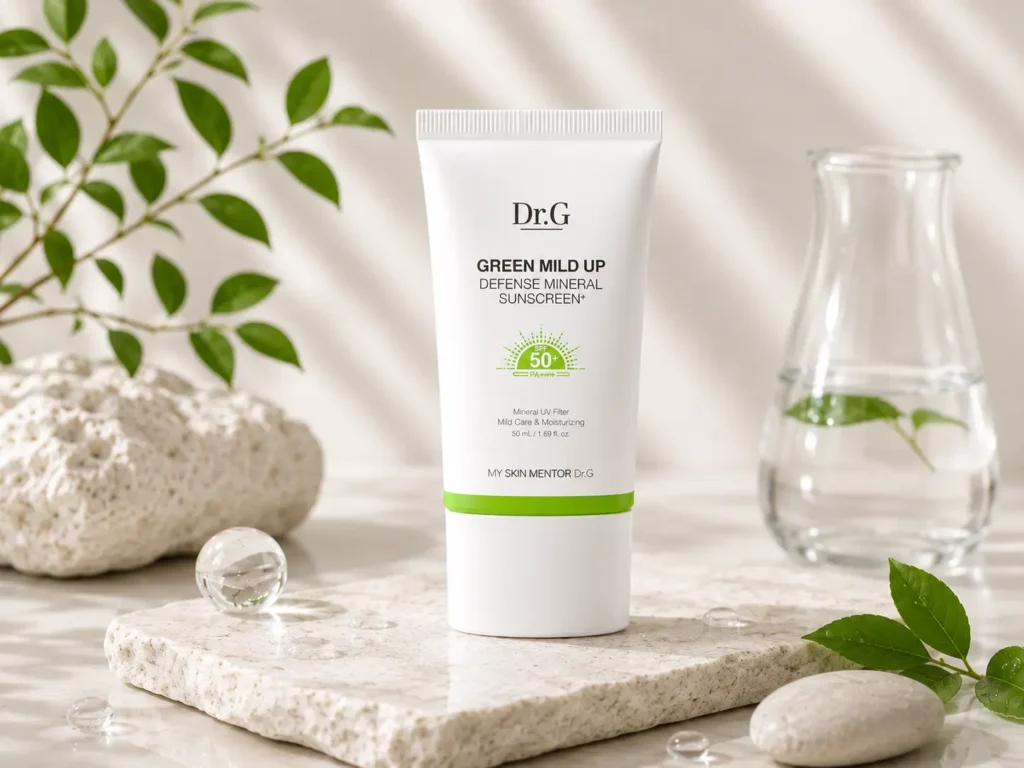
Best for reactive, easily-irritated skin. Hybrid formula, semi-matte finish, slight cast on deeper tones. Fragrance-free, alcohol-free. SPF50+ PA++++. Pros: very low irritation rate in testing. Cons: cast needs blending on darker skin.
8. Mediheal Sun Essence
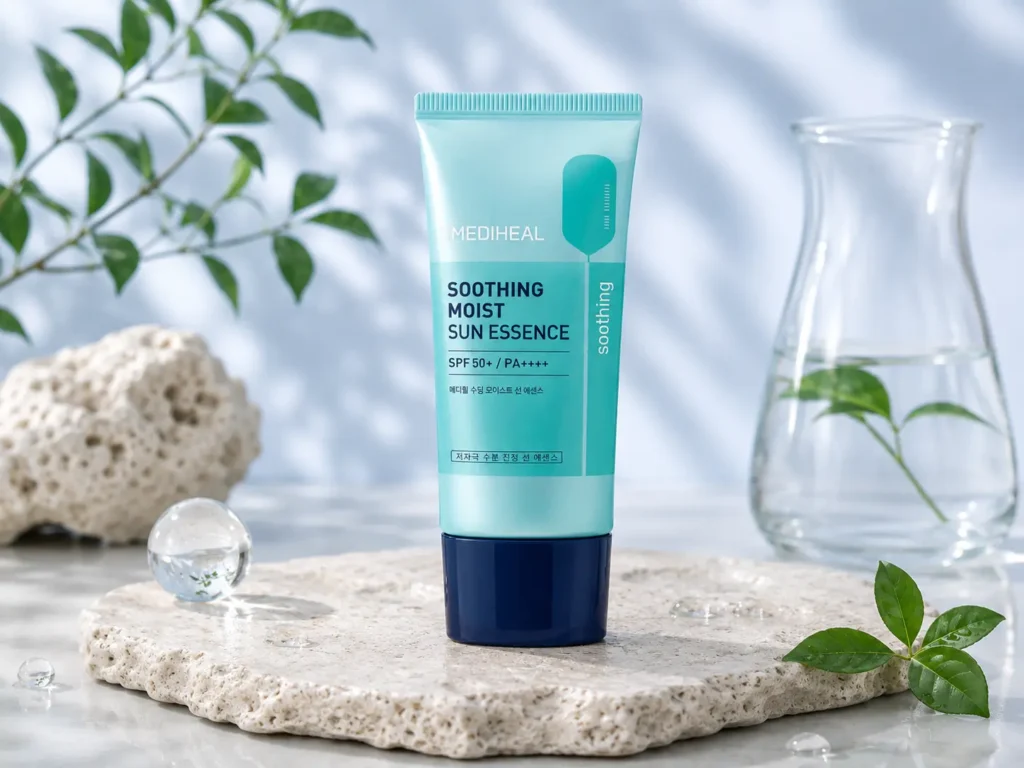
Best for sensitive-oily skin. Lightweight, essence-like texture, no cast. Fragrance-free, alcohol-free. SPF50+ PA+++. Pros: barely-there feel, layers well under makeup. Cons: slightly lower PA rating than others here.
9. P.CALM Mild Air Sun Stick
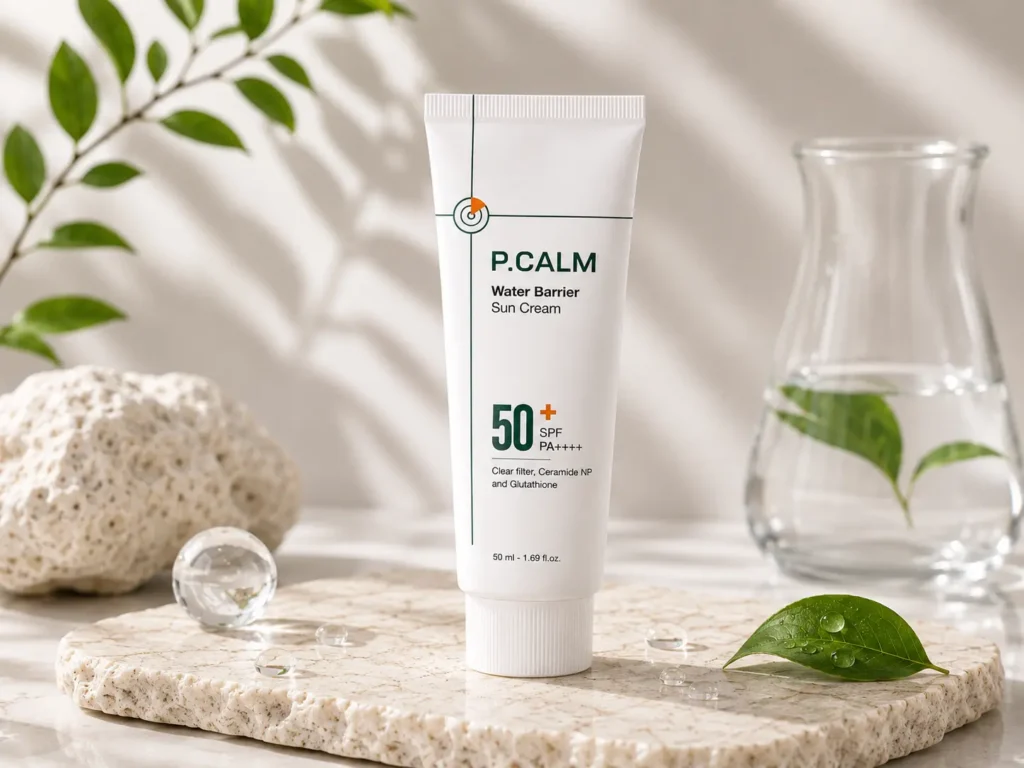
Best for on-the-go reapplication. Cushiony stick, minimal cast. Fragrance-free, alcohol-free. SPF50+ PA++++. Pros: mess-free reapplication over makeup. Cons: less hydrating as a standalone morning sunscreen.
10. Etude SoonJung Directors Moisture Sun Cream
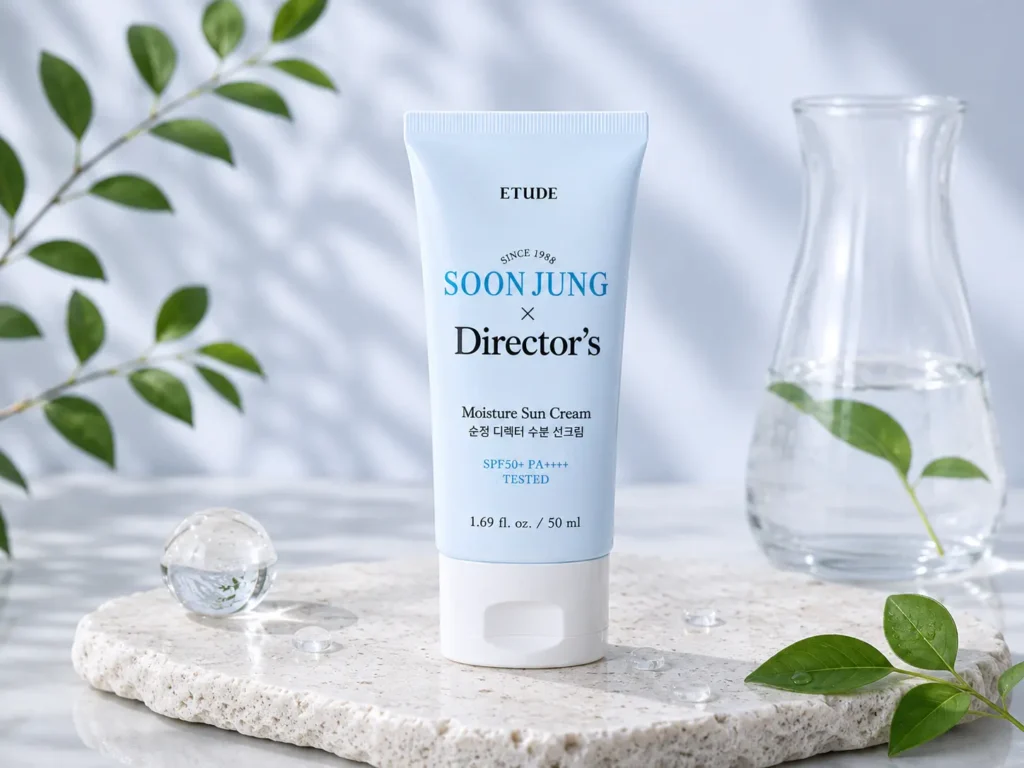
Best for barrier repair and eczema-prone skin. Barely-there finish, no white cast. Fragrance-free, alcohol-free. SPF50+ PA++++. Pros: exceptionally gentle, minimal ingredient list. Cons: less mattifying for oily skin types.
What Real Users Say: Favorite Korean Sunscreens
Choosing a sunscreen isn’t just about ingredients and SPF ratings—real-world experience matters too. To get a broader perspective, I looked through a Reddit discussion where users shared their favorite Korean sunscreens from a list of 10 popular options and explained which ones they actually use and recommend
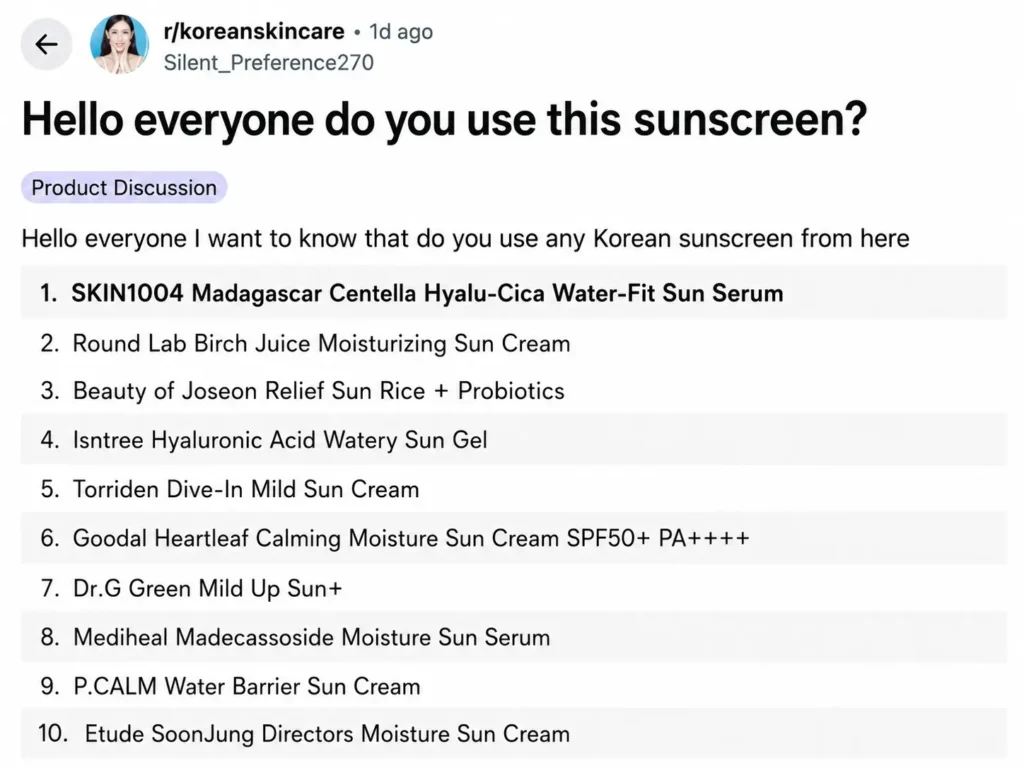
The discussion showed a clear favorite: SKIN1004 Madagascar Centella Hyalu-Cica Water-Fit Sun Serum received the most recommendations from the community.
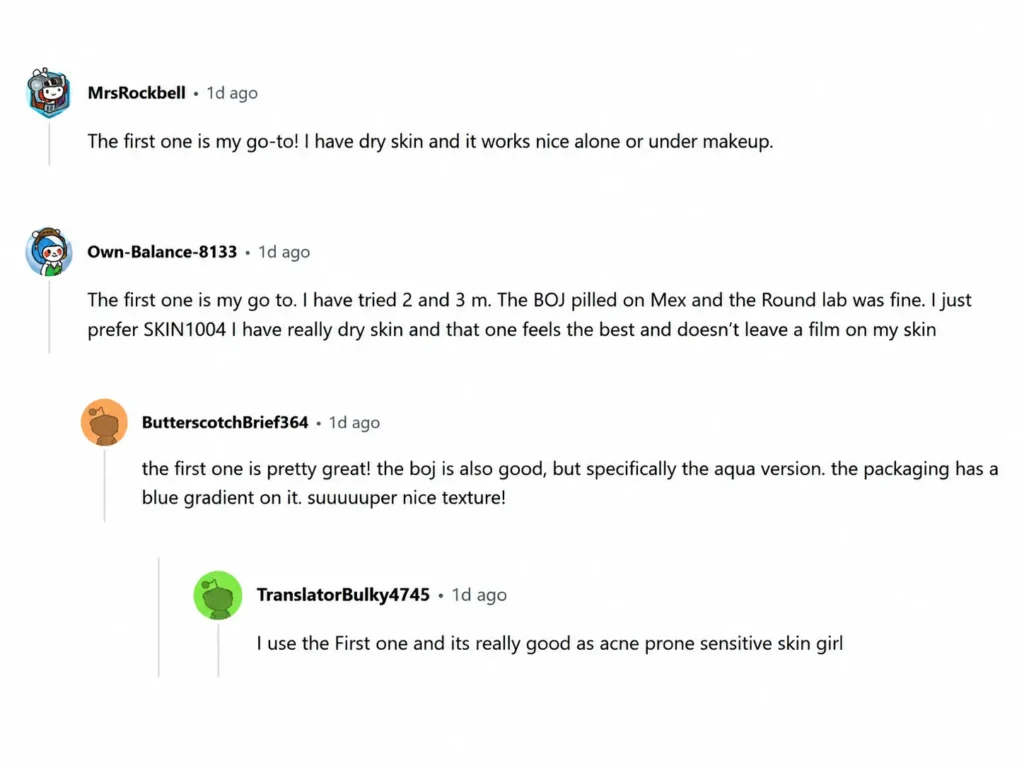
The conversation didn’t stop there. Many users also shared their personal experiences with other sunscreens, explaining what worked well for their skin, what they repurchased, and which formulas they would recommend to others. While everyone’s skin is different, several products were mentioned repeatedly throughout the discussion.
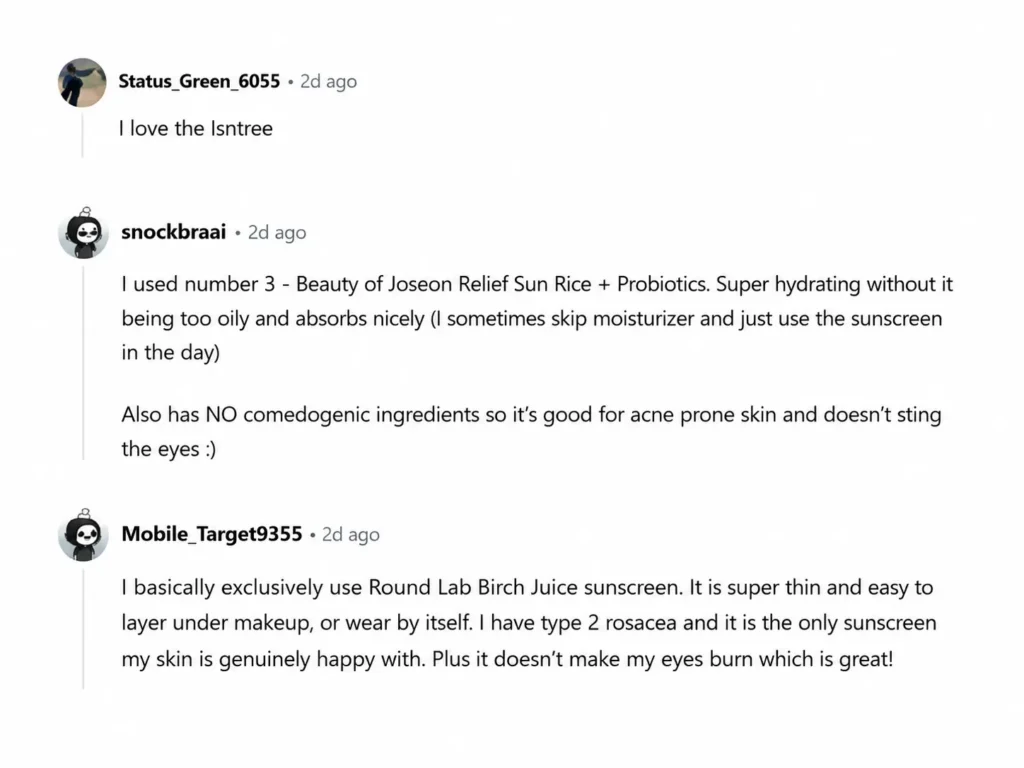
Most Frequently Recommended Sunscreens
Based on the overall community discussion, these were the sunscreens that received the most positive recommendations:
- SKIN1004 Madagascar Centella Hyalu-Cica Water-Fit Sun Serum
- Beauty of Joseon Relief Sun Rice + Probiotics
- Round Lab Birch Juice Moisturizing Sun Cream
- Isntree Hyaluronic Acid Watery Sun Gel
- Dr.G Green Mild Up Sun+
- Torriden Dive-In Mild Sun Cream
- Etude SoonJung Directors Moisture Sun Cream
Note: These recommendations reflect the personal experiences and opinions shared by Reddit users. Since every skin type is different, use them as community insights alongside ingredient research and your own skincare needs.
Korean sunscreen SPF & PA ratings explained
Understanding korean sunscreen SPF PA meaning makes it much easier to shop. SPF measures protection against UVB rays, the ones that cause burning. PA measures UVA protection, rated in pluses — PA+ is basic, PA++++ is the strongest available.
Mineral vs. hybrid vs. chemical sunscreen
Mineral sunscreens sit on top of skin and physically block UV rays, while chemical filters absorb it and convert it to heat. A hybrid sunscreen combines both approaches, often landing on a lighter texture than pure mineral formulas while still being gentler than fully chemical ones — which is part of why so many K-beauty sunscreen options fall into this middle category.
UVA vs. UVB protection
UVB rays cause sunburn and are strongest at midday. UVA rays penetrate deeper, driving premature aging, and stay fairly constant throughout the day — even through windows. Real UVA and UVB protection means checking both the SPF and PA numbers, not just one.
Why Korean sunscreens work for sensitive skin
Between the calming ingredients, lighter textures, and hybrid filter systems, it’s easy to see why a non-irritating korean sunscreen so often outperforms Western equivalents on reactive skin.
How to patch-test a new sunscreen
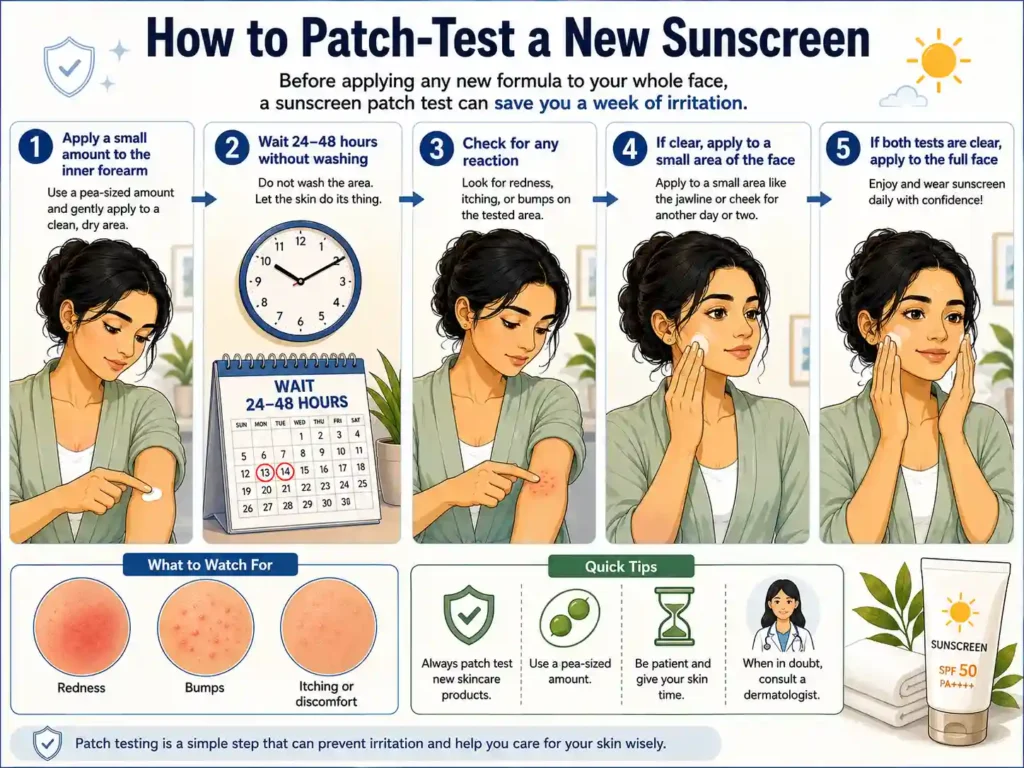
Before applying any new formula to your whole face, a sunscreen patch test can save you a week of irritation.
- Apply a small amount to your inner forearm or behind your ear.
- Wait 24–48 hours without washing the area.
- Check for redness, itching, or bumps.
- If skin stays calm, try it on a small area of your face for another day or two.
- Only apply it fully once both tests come back clear.
FAQ
Is Korean sunscreen good for sensitive skin?
Generally, yes — Korean formulas tend to use lighter textures and more soothing actives like centella and panthenol than many Western drugstore sunscreens. That said, “Korean” isn’t a guarantee of gentleness on its own. Individual formulas still vary widely, so check the ingredient list rather than relying on country of origin alone.
Do Korean sunscreens cause a white cast?
Chemical and hybrid formulas — most of what’s in this guide — generally don’t. Pure mineral sunscreens, like Dr.G Green Mild Up Sun+, can leave a visible cast, especially on deeper skin tones, since they rely on zinc oxide and titanium dioxide sitting on the skin’s surface rather than absorbing into it.
Is mineral or chemical sunscreen better for reactive skin?
Neither is universally better. Mineral sunscreens are usually the safer starting point for very reactive, post-procedure, or compromised skin since they’re less likely to cause chemical sensitivities. Chemical sunscreens offer lighter textures and less white cast, and modern Korean formulas have significantly reduced their irritation risk.
How often should I reapply sunscreen on sensitive skin?
Every two hours during direct sun exposure, same as any sunscreen. For sensitive skin specifically, reapplying with a stick, powder, or mist formula over makeup reduces the friction and rubbing that reapplying a cream can cause, which lowers the chance of irritation from repeated application throughout the day.
Can I use a Korean sunscreen after a procedure like microneedling or a chemical peel?
Only with your provider’s clearance, and only a fragrance-free, low-filter-count formula like Dr.G Green Mild Up Sun+ or Mediheal Madecassoside Moisture Sun Serum. Post-procedure skin barriers vary a lot in how compromised they are, and “gentle” branding doesn’t mean a product is automatically safe on broken or freshly treated skin.
What does PA++++ mean on Korean sunscreen?
PA measures UVA protection on a scale from PA+ to PA++++, with more pluses indicating stronger protection against UVA rays, which cause premature aging and can trigger flare-ups in reactive skin. PA++++ is the highest rating currently used. The US doesn’t have an equivalent labeling system for UVA protection.
Which sunscreen is best for sensitive skin?
SKIN1004 Madagascar Centella Sun is the top pick — its high centella asiatica concentration calms redness fast, and it’s fragrance-free and alcohol-free with minimal white cast.
Can I use Korean sunscreen under makeup?
Yes — lightweight, watery formulas like Isntree or P.CALM layer well under makeup without pilling.