

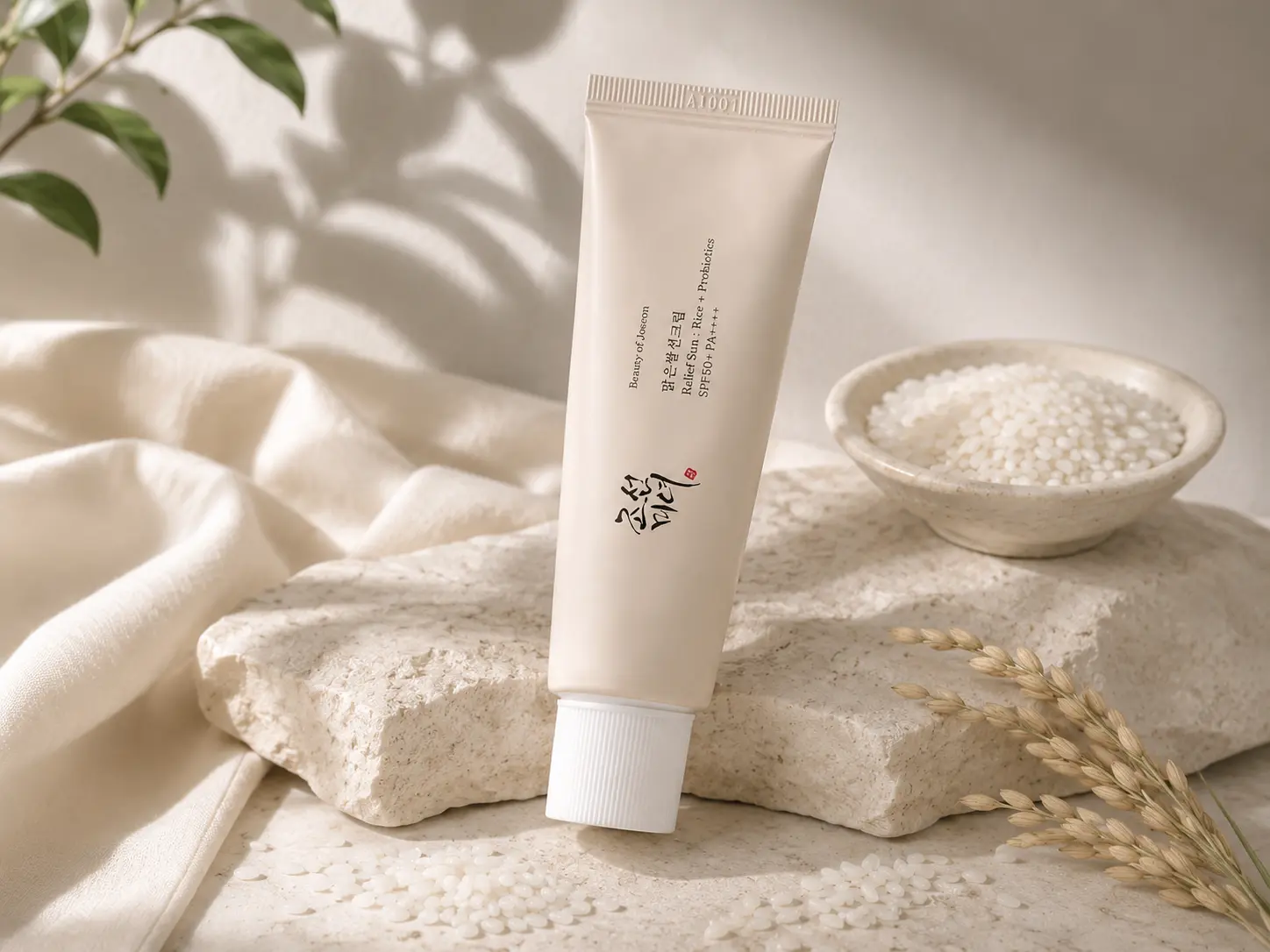
Quick Verdict
The hype around this one is mostly deserved. Relief Sun Rice + Probiotics SPF50+ PA++++ is a lightweight, milky sunscreen that leaves skin dewy instead of greasy, and it doubles as a makeup primer in a pinch. I’d put it at 4.3 out of 5 — great for oily, combination, or normal skin chasing that glassy K-beauty look, less great if you’re set on avoiding chemical filters. Milky-gel texture, and it costs less than most Western sunscreens with comparable coverage.
Pros & Cons
Pros:
- Dewy, non-greasy finish that layers well under makeup
- Works as a light makeup primer
- Reef-safe and cruelty-free
- Cheaper than most SPF50+ options on the market
Cons:
- Can pill if over-applied or layered over unabsorbed products
- Mild fragrance, which may bother scent-sensitive users
- Chemical filters, so no good for mineral-only preferences
- Faint white cast reported under flash photography
Texture & Finish: What It Feels Like on Skin
It goes on like a thin, milky gel — closer to a light lotion than the chalky white sunscreens a lot of us grew up dreading. Blend time is quick, and it settles into something between dewy and glowy without a wet-look shine.
Most skin tones see no obvious cast in regular light, though a few reviewers mention a faint sheen in flash photos. The scent is mild and grassy, more “unscented with a hint of something” than a perfume note, and it fades within minutes.
Ingredients Breakdown: Rice, Probiotics & the Full Formula
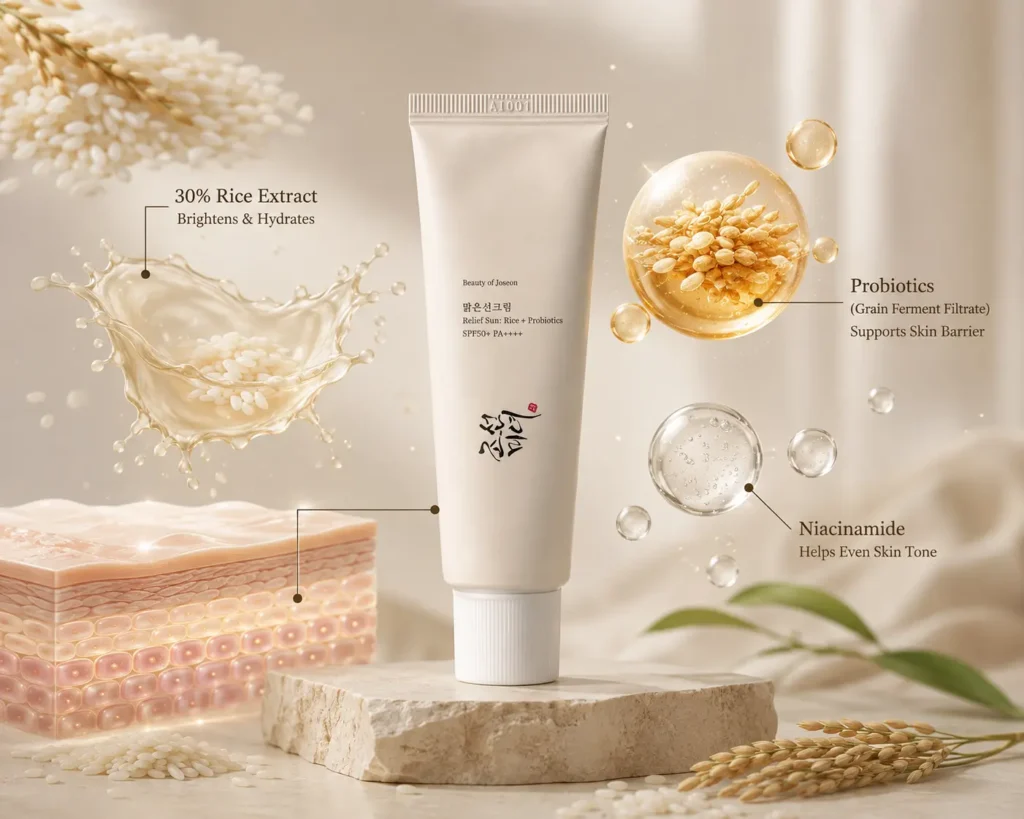
The name isn’t just marketing. Rice extract makes up roughly 30% of the formula, paired with probiotics — usually listed as a grain ferment filtrate — meant to support the skin barrier and calm irritation. It’s a Hanbang formula at heart, drawing on rice and fermentation the way Korean herbal medicine did long before “K-beauty” became a marketing category.
Niacinamide is in there too, evening tone alongside the rice and ferment complex. I’ll skip reprinting the INCI list, since it changes with reformulations — check the current listing before buying.
SPF Protection & UV Filters, Explained Simply
Most reviews name-drop the UV filters — Uvinul A Plus, Tinosorb M, Iscotrizinol — without saying what they do. In plain terms: these absorb UV radiation before it damages skin cells, instead of sitting on top and physically blocking it like mineral filters such as zinc oxide.
SPF50+ blocks a very high share of UVB rays, the kind behind sunburn. PA++++ is the Asian-beauty rating for UVA protection, tied to premature aging — four pluses is the top of the scale. That combination covers both bases for daily US wear, assuming you apply enough and reapply in direct sun.
Who Should Use It — and Who Should Avoid It
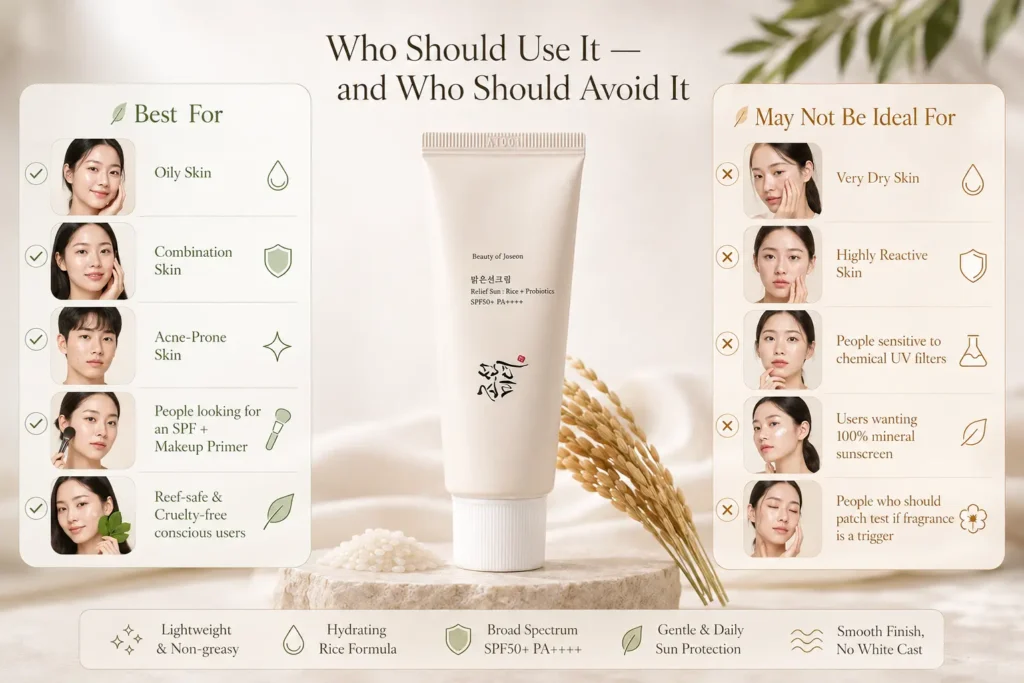
Best for: oily and combination skin, acne-prone skin that reacts badly to heavy sunscreens, anyone wanting an SPF-primer hybrid, and buyers who care about reef-safe, cruelty-free formulas.
Should avoid: very dry or reactive skin sensitive to chemical filters, and anyone who wants mineral-only sunscreen. Patch test first if fragrance is a trigger.
Real User Experiences: What Reddit & Reviewers Say
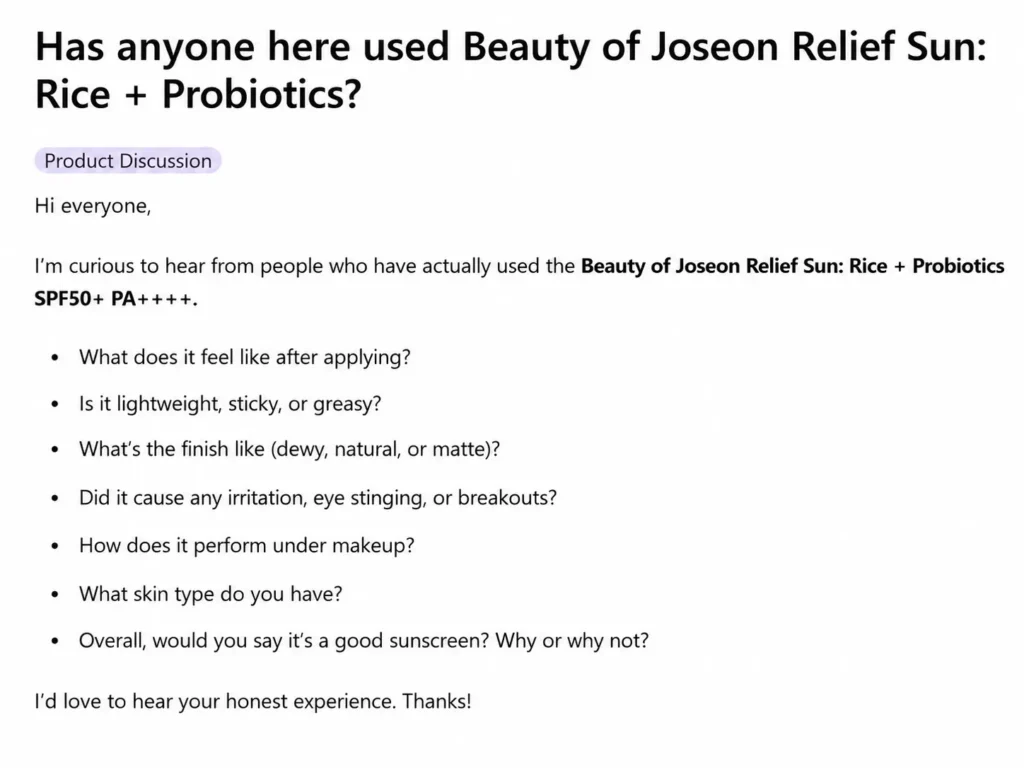
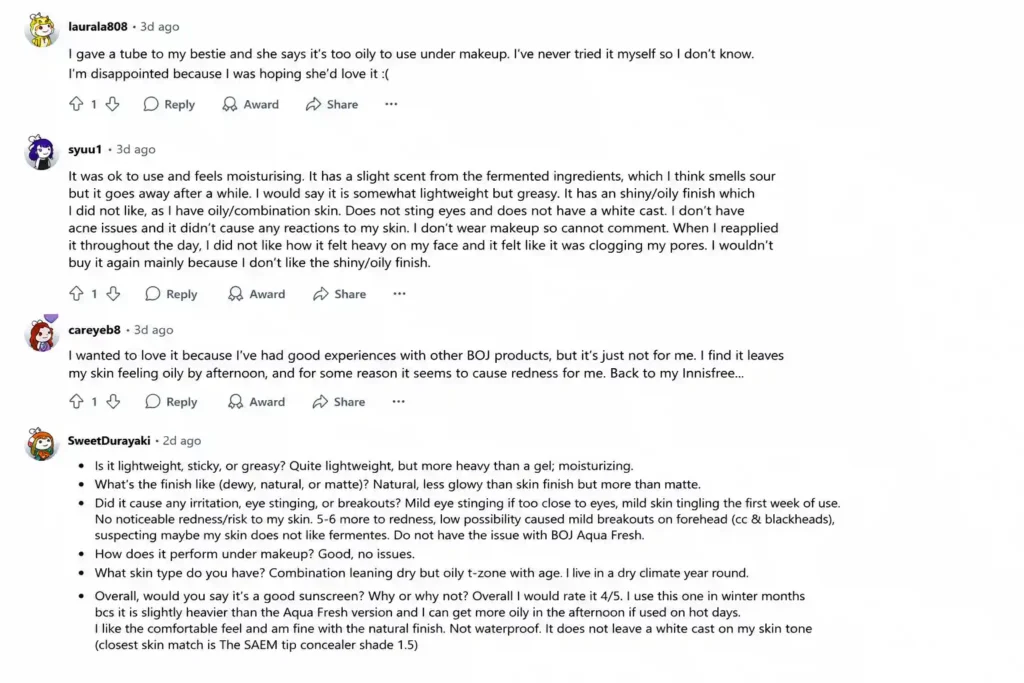
I asked directly in a skincare community what this feels like day to day, and the answers split more than most reviews let on.
Nobody reported a white cast — one commenter even matched it to her concealer shade to check. But “lightweight” was relative: several people found it leaner than a cream but heavier than a gel, with a shiny finish that oily and combination skin didn’t love by afternoon. One person stopped repurchasing over the shine alone.
The fermented ingredients come with a small trade-off — a faintly sour scent that fades in minutes, occasional mild eye stinging near the lash line, and for one blackhead-prone commenter, breakouts she didn’t get from the brand’s Aqua-Fresh version.
Skin type decided everything. Dry and combination-dry users rated it around 4/5 and preferred it for colder months. Oilier skin ran shinier by day’s end — one person’s friend found it too oily for makeup entirely.
How It Performs Under Makeup
Applied last in your skincare routine, it works reasonably well as a primer — the dewy finish gives foundation something to grip, with minimal pilling if you let it set a minute first. Longevity through a full wear-day is decent, though oily skin may see breakthrough shine by afternoon, standard for sunscreen-primer hybrids generally.
Relief Sun vs. Round Lab vs. Isntree: Comparison Table
All three are solid SPF50+ PA++++ Korean sunscreens, but they land in different lanes. Relief Sun leans dewy and glow-forward, Round Lab leans hydrating and soothing, Isntree leans watery and near-weightless.
| Relief Sun Rice + Probiotics | Round Lab Birch Juice Sun Cream | Isntree Watery Sun Gel | |
|---|---|---|---|
| Texture | Milky gel, dewy | Creamier, hydrating | Watery gel, near-weightless |
| Best for | Oily/combo, glow seekers | Dry/sensitive skin | Very oily skin |
| Finish | Light sheen | Slightly richer | Almost matte |
| Price tier | Budget-friendly | Similar range | Similar range |
Price, Where to Buy & Shelf Life
Pricing shifts often enough across YesStyle, Stylevana, and Amazon that quoting exact figures here would go stale fast — check current listings before buying. Generally it sits toward the affordable end of the K-beauty sunscreen category.
On shelf life: expect roughly 6–12 months of stability once opened, and check the PAO symbol on your bottle. Store it away from heat and direct sun — SPF actives degrade over time.
Final Verdict
This one lives up to the reputation. It’s not flawless — the fragrance and the occasional flash-photo white cast will bother some people — but for oily and combination skin after a dewy finish with real SPF50+ PA++++ coverage, I’m struggling to think of something better at this price. If mineral-only is a hard requirement for you, this isn’t your sunscreen.
Frequently Asked Questions
Is it good for oily skin?
Yes. The milky-gel formula absorbs fast without the greasy residue heavier sunscreens leave behind.
Does it leave a white cast?
Not typically in daylight, but some users notice a faint cast under flash or bright artificial light.
Is it reef-safe and cruelty-free?
Yes — Beauty of Joseon markets it as both.
Relief Sun vs. Round Lab — which is better?
Neither wins outright. Relief Sun suits oily, glow-seeking skin; Round Lab’s Birch Juice formula leans more hydrating for drier skin.
Can I wear it under makeup?
Yes. Applied last in your routine, it works as a lightweight primer with minimal pilling once it sets.
Does it work on darker skin tones?
Reports are mixed and mostly secondhand — read recent reviews from people with a similar tone before buying, since experiences vary.
Is it safe for acne-prone or sensitive skin?
Generally well tolerated, but the fragrance and chemical filters mean reactive skin should patch test first.